SW6 House
SW6 · 1890s Victorian townhouse · Completed 2024SW6, London
Location1890s Victorian townhouse
Building2025
CompletedKitchen renovation within existing extension footprint
Scope01 - the briefThe brief.
A family kitchen that had stopped pulling its weight. The existing extension footprint was the right size — the layout inside it was not. Storage was awkward, the island too small for the way the family actually cooked, appliances scattered. The brief was a full rebuild of the kitchen within the walls already there, with no structural moves: a working family kitchen designed to take fifteen years of weekday breakfasts and Sunday lunches.
01 - the buildingThe building.
A 1890s SW6 townhouse with a generous rear extension built in an earlier renovation. The shell was sound and the proportions correct, but the kitchen fit-out belonged to a different decade and a different way of living — too many small cupboards, an island sized for show rather than for cooking, appliances bolted on where they would fit rather than where they should sit.
03 - the approachThe approach.
One room, drawn from scratch. We held the existing footprint and rebuilt the kitchen as a single piece of architecture inside it — full-height joinery on the long wall, a central island sized for two cooks, and a black-and-white stone floor that the rest of the room hangs from. Every appliance, fitting and finish was specified before the cabinetmaker started cutting.
04 - the worksThe Works.
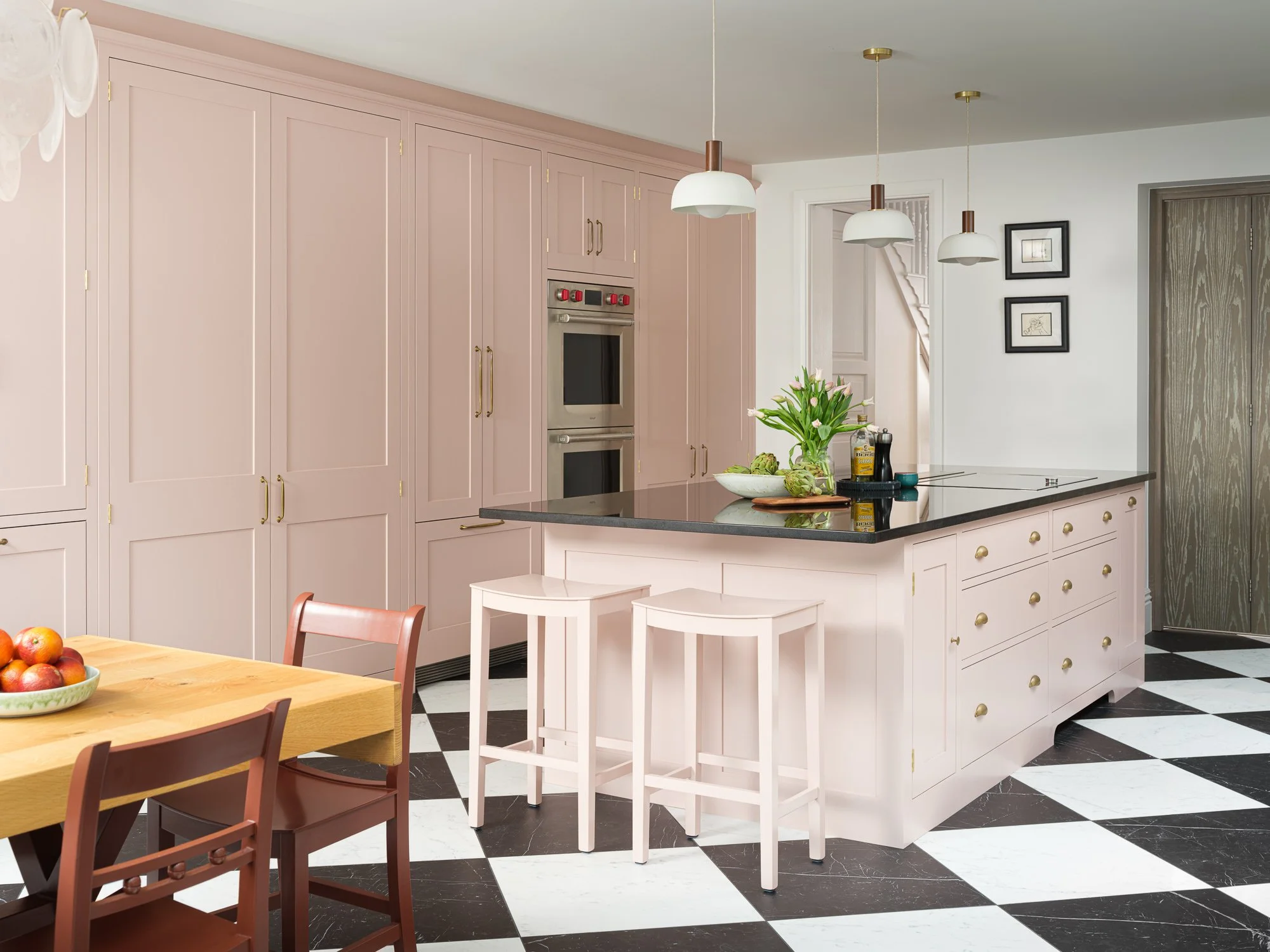
Plan. The island was redrawn to seat four and prep for two without colliding. Workflow runs from cooktop to sink to fridge in a single arc; the island sits inside that arc rather than across it.
Storage. Full-height shaker-style joinery runs the length of the long wall, drawn by the studio and made to take a working family — pull-out pantry storage, integrated drinks cooler drawer, dual integrated dishwashers, all behind a single calm cabinet line. Appliances are concealed and serviceable, not stylised.
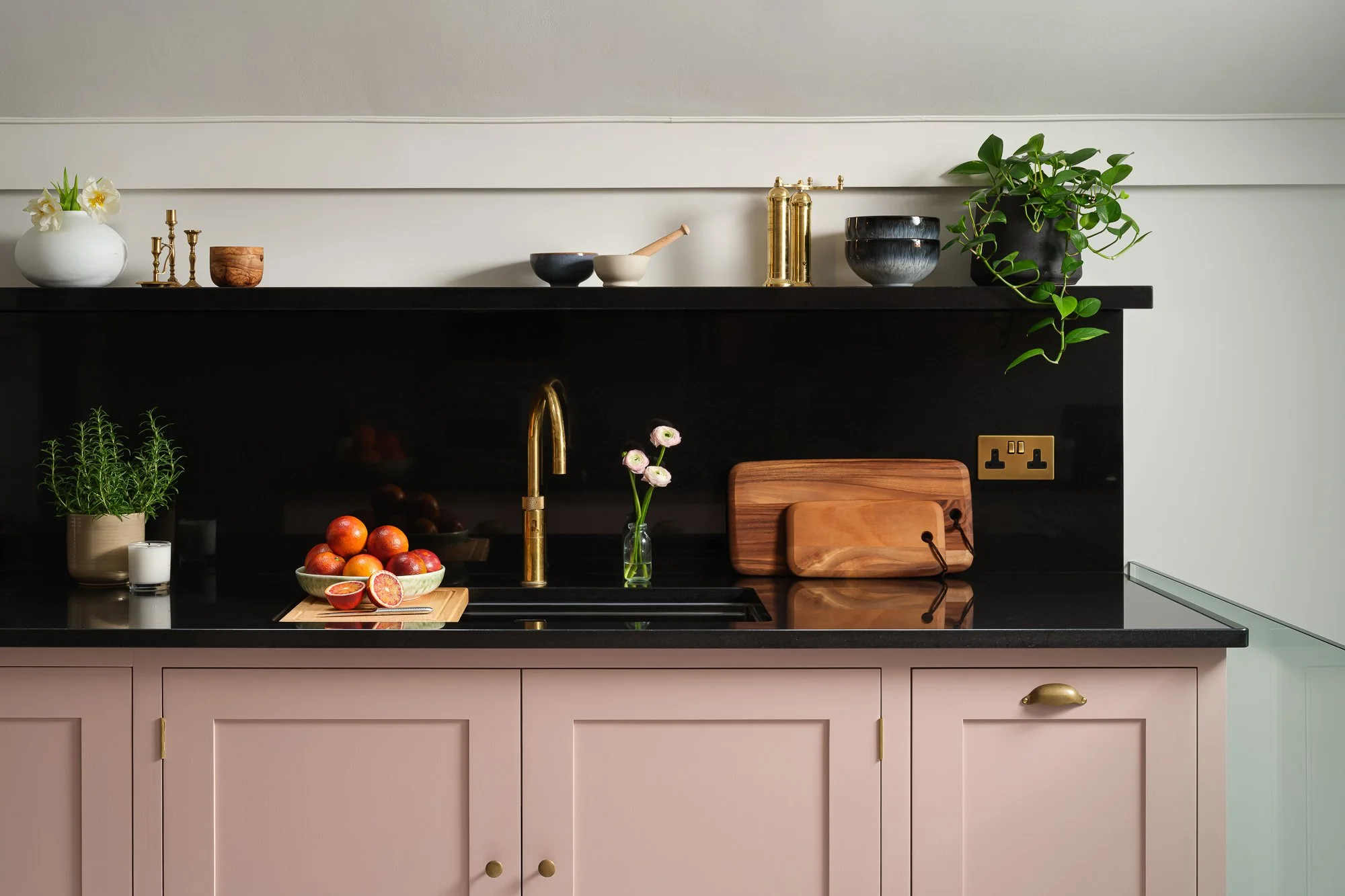
Surfaces. Black stone worktops, honed, run unbroken across the island and the run. The floor — black-and-white checkerboard stone in a generous tile — was set on the kitchen’s long axis to lengthen the room visually and to give the joinery wall something to read against.
Lighting. Three layers: a sculptural pendant over the island for evening, recessed ceiling lighting for the wider room, and discreet task lighting under the upper joinery for the cook. Each layer on its own circuit, dimmed independently.
05 - the interiorThe interior.
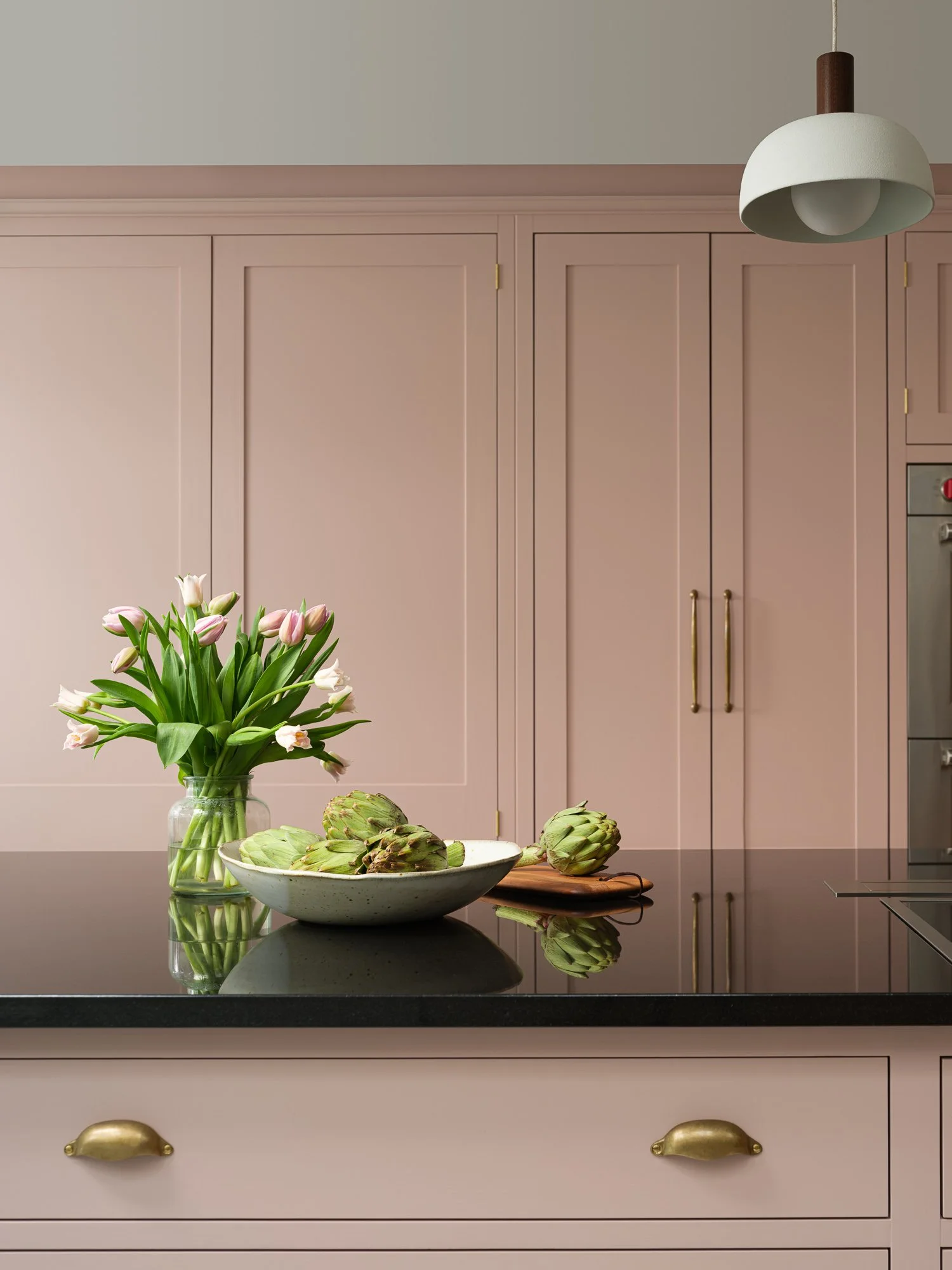
The palette holds three notes — a muted blush on the shaker cabinetry, black stone on the worktops and floor, brushed brass on the hardware. The blush is matte and quiet against the gloss of the worktop; the brass picks up the warmer light from the pendants in the evening.
The full-height joinery reads as a calm backdrop rather than a feature. The work is done in the detail: the door profile, the handle, the floor tile size, the run of the worktop seam. None of it asks to be looked at; all of it rewards looking.
06 - in detailIn Detail.
Four close-up moments that carry the project.
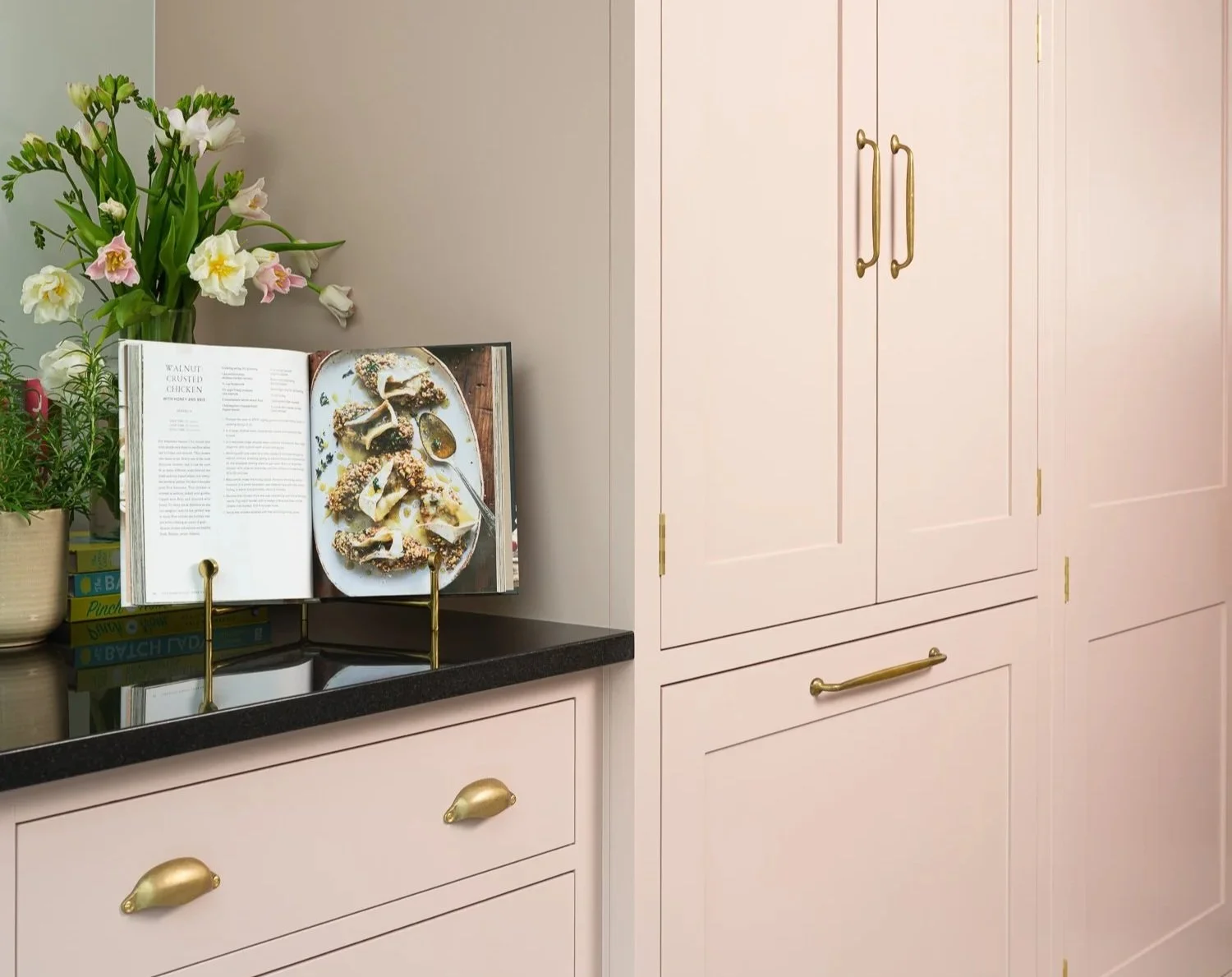
Ironmongery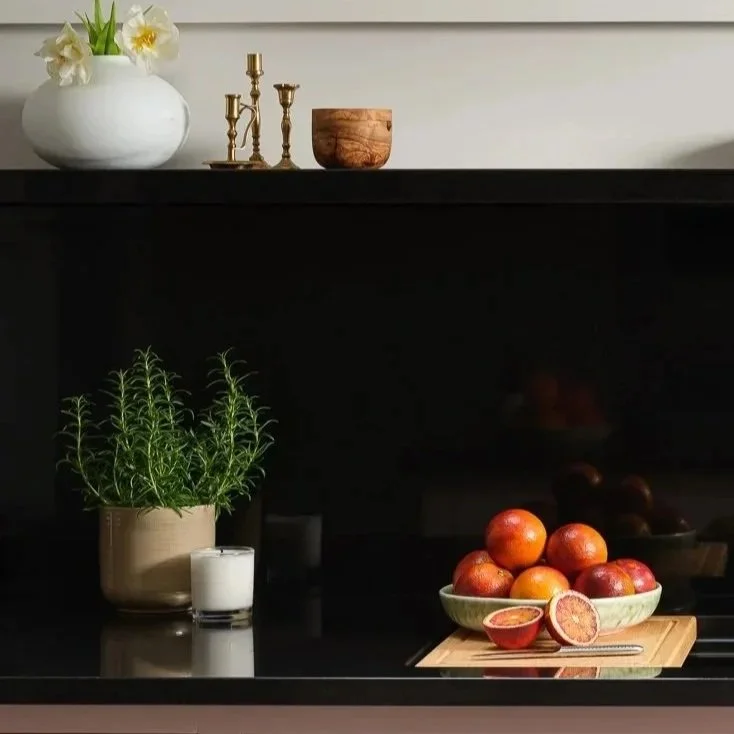
Worktop 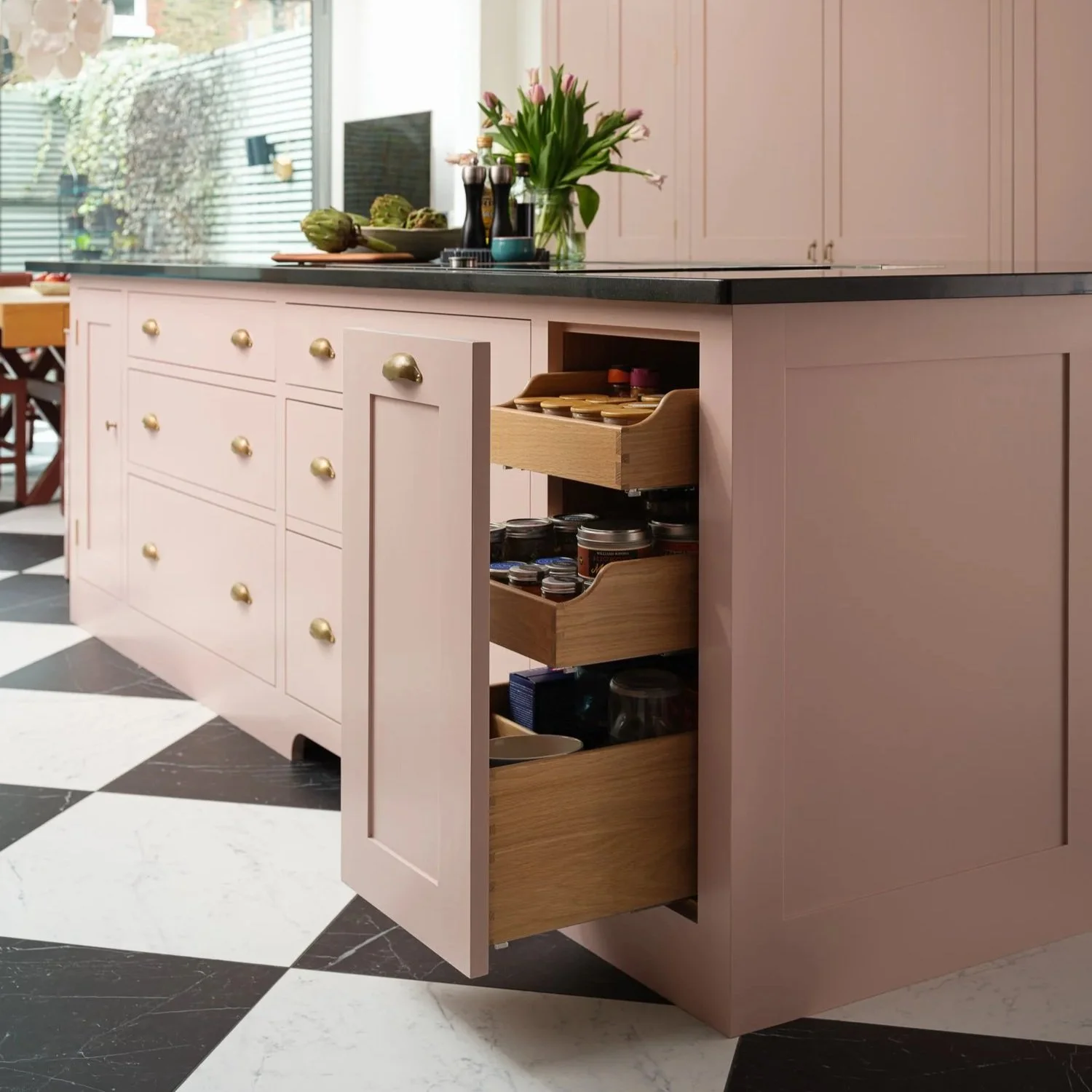
Floor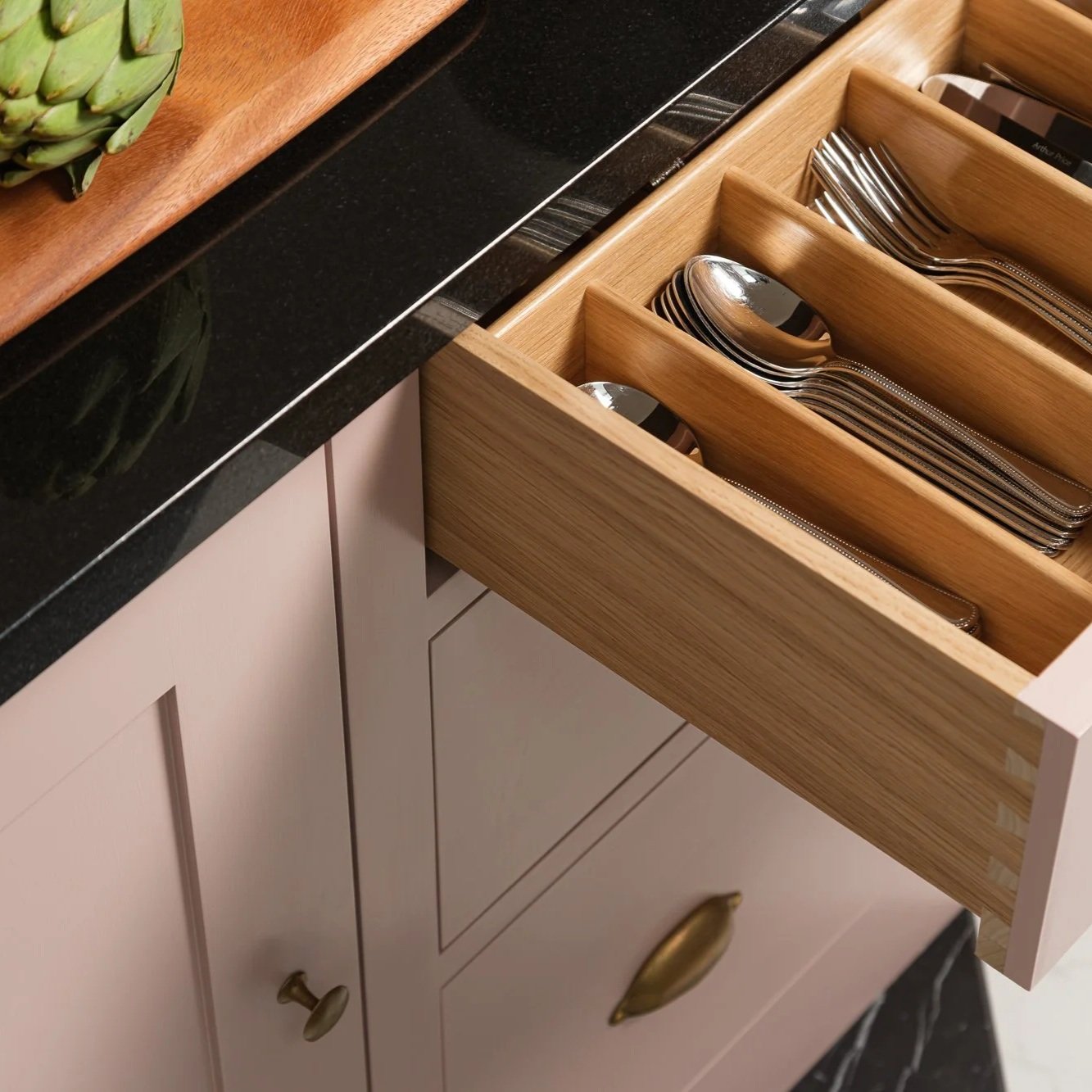
organisationThe kitchen we had before was a room full of stuff. This one is a room we live in. It does everything we ask of it without asking anything back.
— The owner, SW6 House